Castle Moat Maintenance Checklist: Seasonal Tasks for Heritage Volunteers
A moat is not a pond. It is a working channel — inlet, outlet, level, banks — and it fails the way water engineering always fails: slowly, then all at once. Volunteers who keep moats in decent order are rarely doing dramatic work. They walk the same circuit, season after season, and notice that the overflow grate has half an inch of leaves on it, that the bank below the bridge is starting to slump, that a willow seedling has taken hold where the revetment is thinnest.
That sort of noticing is the whole job. Here is what to look at, and when, so that small problems stay small.
Start With a Datum and a Logbook
"The water looks low" is not an observation you can act on. Fix a reference point — a marked stake at the overflow, a painted line on a stone, a notch in the headwall — and record the level against it at every visit. A datum turns a vague impression into a measurement. If the level is 40 mm below the notch in April and 120 mm below it in July, you can ask why. If it has returned to the notch after autumn rain, you have learned something about how the moat responds to its catchment.
Photograph the same three or four standing spots each season: the inlet, the outlet, the longest straight stretch, the worst-eroding bank. A folder of images sorted by year will tell you more about how a moat behaves than any single inspection. Add a scale where you can — a ranging rod, a boot, a marked post — so that next year's volunteer can judge whether the silt bank has grown or the crack has widened.
- Date, weather, recent rainfall. A level that drops after three dry weeks means something different from one that drops after a wet one.
- Level against the datum. Up, down, or holding.
- Anything new. Fallen branches, oil sheen, algae blooms, burrows in the bank, new cracks in masonry, footprints that suggest people are using a weak edge as a path.
- Work done and by whom. Even "cleared leaves from grate" is useful. It explains why the level changed, and it reminds the next volunteer that the job is shared.
Know the Moat's Plumbing
Most moats are not isolated ditches. They have a source, a route, and a destination. The source may be a stream, a spring, a leat, a sluice from a river, or simply surface run-off from surrounding ground. The route is the channel itself, with its bends, islands, bridges, and revetments. The destination is the outlet, the overflow, or a culvert under a causeway. Walk the whole system, not just the picturesque stretch beside the castle. The trouble is almost always at one of the ends.
At the inlet, look for the first signs of blockage: leaves pinned against a grille, gravel washed into a channel, a gate that no longer sits flush. At the outlet, check that water is actually leaving. A moat that stays high in dry weather may be held back by a choked outlet; a moat that empties too far may have a leaking bank, a dropped sill, or a downstream channel that has eroded below the designed level. The overflow is the safety valve. If it is blocked, the next storm will find another way out — usually through the bank you least want to lose.
Water always finds the weak point. The volunteer's task is to find it first, while it is still a damp patch rather than a breach.
The Seasonal Round
Spring: Watch the Wake-Up
Spring is about flow and growth. Snowmelt and spring rain test the inlet, outlet, and overflow. Clear debris from grates before the first big storm, not after. Check banks for frost-heave: soil that has been lifted and loosened by repeated freezing can slump once it is saturated. Look for new burrows — rabbits, foxes, badgers — because a bank with holes in it is a bank with pipes through it. Remove tree seedlings while they are still pullable by hand. A willow or alder that is easy to tug out in April will need a saw and a stump treatment by August, and its roots will already be searching for water in the revetment.
This is also the time to inspect masonry and revetment above the waterline. Winter may have shifted a coping stone or opened a joint. Photograph it, record it, and if a stone is loose, mark the area with tape and tell the site manager. Do not try to repoint underwater or from a ladder over soft ground unless you are trained and equipped for it.
Summer: Manage Level and Vegetation
Summer is low water and high growth. The level may drop naturally, but it should not disappear. If the moat is lower than usual, compare notes with your datum and with rainfall records. Is the inlet still running? Is the outlet lower than it was? Are there signs of seepage on the outer bank — dark, damp patches, patches of rush or sedge that stay green when everything else browns? These can indicate a leak that will worsen when autumn rain refills the channel.
Manage vegetation with a light hand. A completely bare bank erodes faster; a bank covered in brambles and saplings hides defects and can damage masonry. Cut back growth that obscures inspection points, but leave marginal plants where they are helping to bind the bank. Remove invasive species early. Himalayan balsam, Japanese knotweed, and floating pennywort can all turn a maintenance job into a legal and ecological problem if they are allowed to establish.
Autumn: Prepare for Water
Autumn is the most important season for moat volunteers. Leaves are the enemy of every grate, culvert, and overflow. Clear them often, not once. A single storm can move a season's fall into the water in an afternoon. Check that the overflow is clear and that the water can pass freely. Inspect the banks before the ground gets too wet to walk safely. Look for cracks that have opened during summer, silt that has built up at bends, and any new fallen timber that could become a dam.
If your site has sluices or penstocks, exercise them while conditions are moderate. A gate that has not been moved for years may not move when you need it. Record the water level before and after any adjustment. If you lower the moat for winter, do it gradually; a sudden drawdown can cause bank slips as saturated soil loses its support.
Winter: Observe, Don't Intervene
Winter is for observation and emergency response. High water, saturated banks, and cold conditions make most repair work unsafe and ineffective. Walk the circuit from solid ground. Note where water is running over the bank, where the overflow is roaring, where debris is collecting. Photograph flood levels against a fixed point. Do not wade in a moat in winter, and do not send volunteers onto ice. If a blockage is causing flooding, call the responsible person or emergency contact rather than attempting a rescue with hand tools.
Winter is also a good time to plan. Review the year's logbook. Which problems recurred? Which fixes lasted? Which section of bank eroded fastest? Use that evidence to set next year's priorities and budget. A well-kept logbook is a grant application waiting to happen.
Reading the Water: Warning Signs Not to Ignore
Some observations are routine; some should trigger a call before the next volunteer day. Learn the difference.
- New damp patches on the outer bank. Water is finding a path through or under the bank.
- Sudden level drop with no dry weather. A leak, a collapsed culvert, or a blocked outlet downstream.
- Swirling water at the surface. An underwater hole or a failing structure.
- Cracks that have widened since last season. Movement in masonry, revetment, or headwall.
- Burrows or tunnels in the bank. Animals can undermine a bank as effectively as a pipe.
- Oil, foam, or discoloured water. Pollution, which may need immediate reporting.
- Dead fish or distressed waterfowl. A sign of low oxygen, pollution, or disease.
If any of these appear, record the location precisely, take photographs, and escalate. A volunteer's most valuable contribution is often a timely warning, not a heroic repair.
Working Safely and Respecting the Heritage
Moats combine water, mud, slopes, old masonry, and sometimes protected wildlife. No task is worth an injury. Work in pairs, tell someone where you are going, and carry a phone. Wear gloves, boots with grip, and a buoyancy aid if you are anywhere near deep or fast water. Never enter the water alone. Never use a ladder on soft bank without a stable base. Never lift a stone or log without checking what it is supporting.
Heritage fabric is not just the castle. The bank profile, the revetment, the sluice, the overflow, and the silt regime are all part of the monument. Before removing silt or vegetation, check whether the site has a conservation plan or a wildlife licence requirement. Bats, water voles, nesting birds, and rare plants may all have legal protection. The right intervention is often the smallest one that keeps water moving and the bank stable.
When to Call in a Professional
Volunteers can clear a grate, record a level, pull a seedling, and report a crack. They should not design a repair, excavate a bank, dive a culvert, or repoint medieval masonry without supervision. Call in an engineer or heritage specialist when you see structural movement, a leak that is worsening, a collapsed culvert, a bank slip that threatens a path or bridge, or any change you do not understand. The cost of an inspection is almost always less than the cost of a breach.
Keep the logbook going. Keep the photographs together. Keep the circuit regular. A moat does not need volunteers to be heroic; it needs them to be consistent. Walk it in spring, watch it in summer, clear it in autumn, and record it in winter. Do that, and the small problems will stay small — which is the whole art of keeping a castle moat alive.
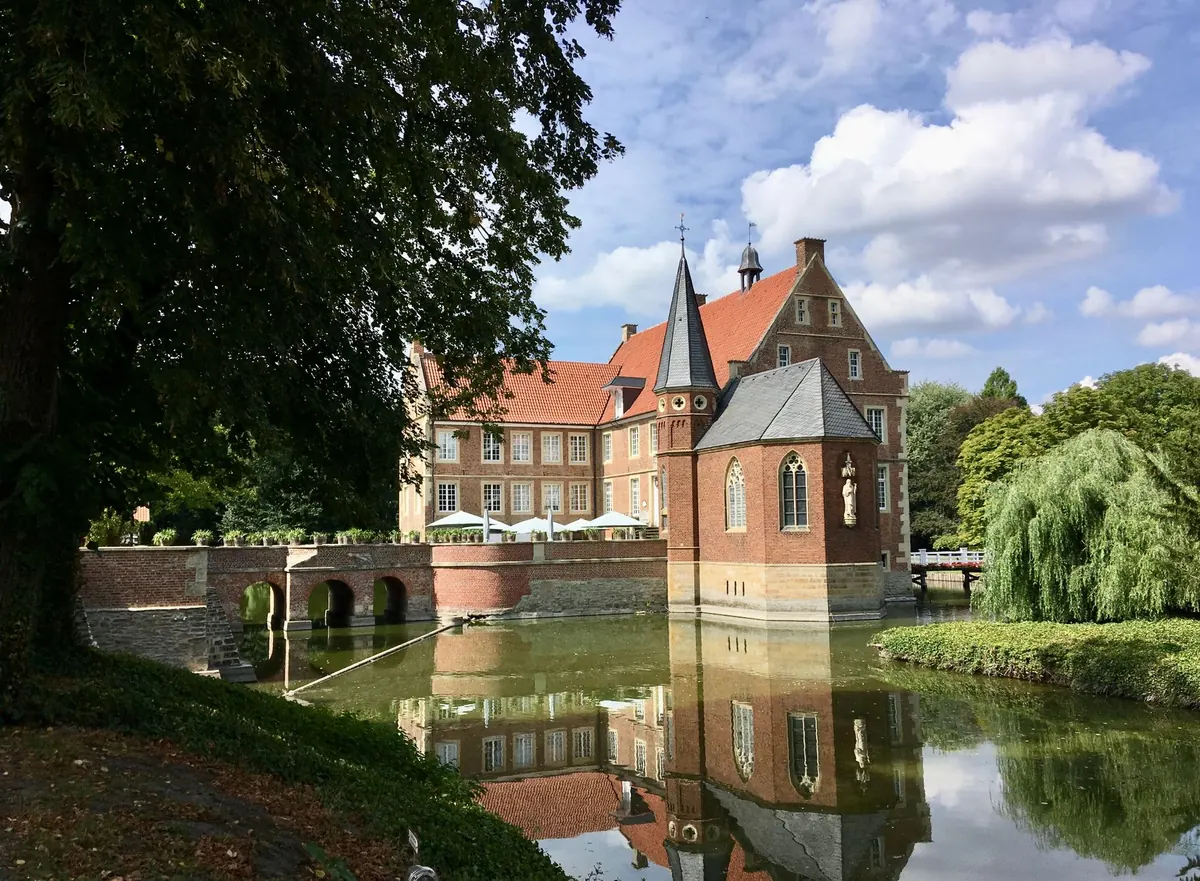
Photo: Hermann Breitbach / Pexels